Laparoscopy in Pregnancy

Laparoscopy In Pregnancy

Specialized Minimally Invasive Surgery for Expectant Mothers

Managing surgical conditions during pregnancy requires an extraordinary level of skill and caution. Dr. Neha Dagade is one of the few specialists trained to perform Laparoscopic Surgery during Pregnancy, ensuring that necessary medical interventions are handled with minimal risk to both the mother and the developing baby.

Can Laparoscopy be Performed During Pregnancy?

Historically, any surgery required during pregnancy was performed via a large "open" incision (Laparotomy). However, with advancements in technology and surgical technique, Laparoscopy is now considered a safe and often preferred alternative.
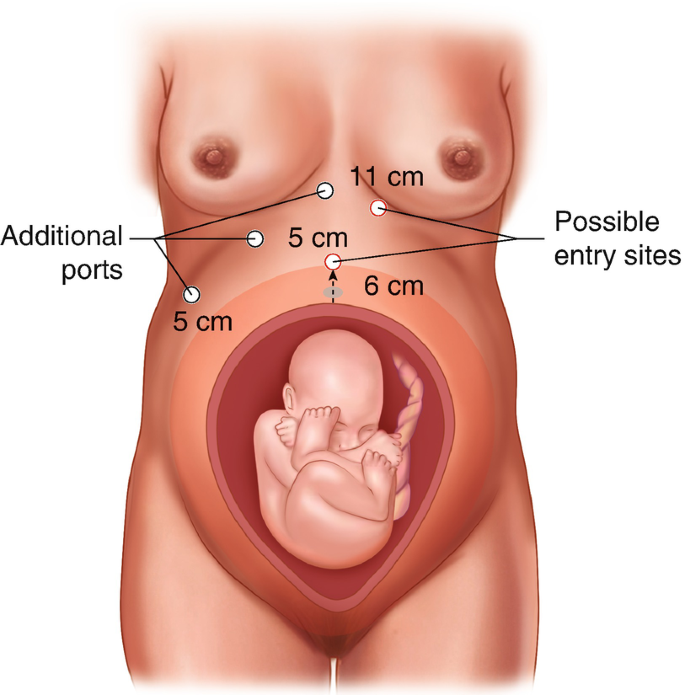
Dr. Dagade utilizes specific protocols—such as adjusted CO2 pressure and specialized trocar placement—to ensure the uterus is not disturbed while the surgical issue is resolved.

Common Conditions Requiring Surgery During Pregnancy

While elective surgeries are postponed until after delivery, certain acute conditions require immediate intervention to prevent complications:

    1. Ovarian Torsion or Adnexal Masses: If an ovarian cyst twists (torsion) or grows excessively large, it can cause severe pain and risk of rupture. Dr. Dagade performs precise laparoscopic "untwisting" or cyst removal to preserve the ovary and the pregnancy.
    2. Gallstones (Cholecystitis): Hormonal changes during pregnancy can increase the risk of gallstone formation. If the gallbladder becomes severely inflamed or blocked, laparoscopic removal (cholecystectomy) is the safest way to prevent further attacks.
    3. Acute Appendicitis: Appendicitis is the most common non-obstetric surgical emergency during pregnancy. If left untreated, it can lead to rupture and infection. Laparoscopy allows for a quick diagnosis and removal of the appendix with minimal manipulation of the uterus.

Safety Protocols & Timing

Dr. Neha Dagade adheres to international safety guidelines to ensure the highest standards of care:

  • Ideal Timing: While laparoscopy can be performed in any trimester if it is a life-saving emergency, the second trimester is generally the "gold standard" window for necessary surgical interventions.
  • Fetal Monitoring: Pre-operative and post-operative monitoring of the fetal heart rate is mandatory to ensure the baby’s well-being.
  • Low-Pressure Pneumoperitoneum: Using lower gas pressures to maintain stable blood flow to the placenta.
  • Expert Anesthesia: Close coordination with obstetric anesthesiologists at KEM Hospital to manage maternal oxygenation and heart rate.

Benefits of the Laparoscopic Approach for Pregnant Patients

  • Reduced Uterine Irritability: Smaller incisions and less handling of internal organs reduce the risk of stimulating preterm labor.
  • Faster Recovery: Expectant mothers can return to normal activity and nutrition sooner, which is vital for fetal growth.
  • Lower Risk of Thromboembolism: Faster mobilization after surgery reduces the risk of blood clots, which is naturally higher during pregnancy.
  • Minimal Pain Medication: Less post-operative pain means a reduced need for analgesics that could cross the placental barrier.

Why Choose Dr. Neha Dagade?

  • Advanced Certification: Her Diploma in Pelvic Endoscopy (Germany) provide her with the technical precision required for high-risk surgical environments.
  • Integrated Care: Practicing at KEM Hospital, Pune, she works alongside a dedicated team of Neonatologists and Obstetricians to provide a 360-degree safety net.
  • Experience in High-Risk Cases: Dr. Dagade is seasoned in handling complex scenarios where surgical speed and accuracy are paramount for maternal-fetal outcomes.

Consultation for Surgical Concerns in Pregnancy

If you have been diagnosed with a surgical condition while pregnant, it is essential to consult with a specialist who understands the nuances of laparoscopic intervention in this unique state.