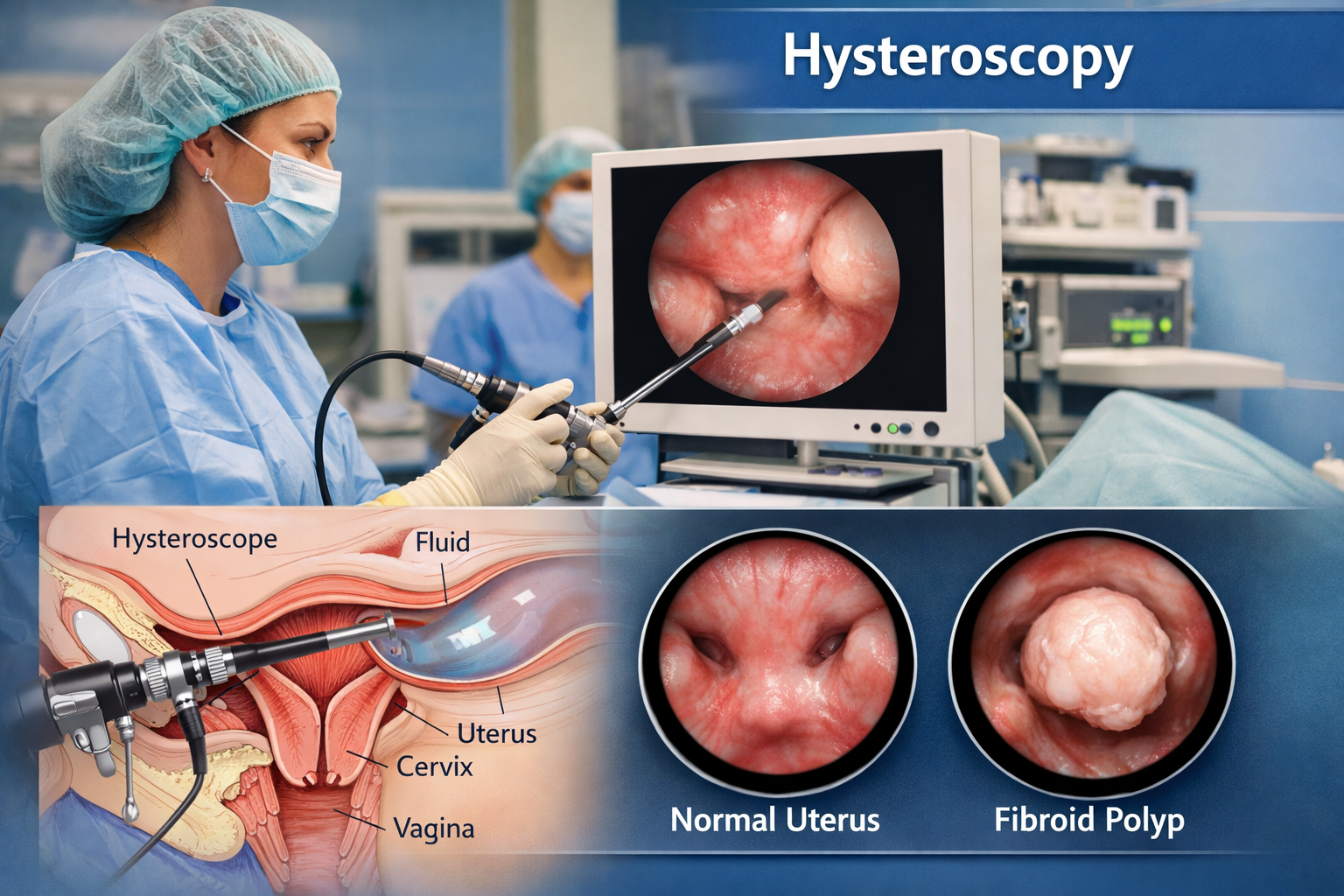
Types of Hysteroscopy
Dr. Neha Dagade performs two main types of hysteroscopic procedures:
1. Diagnostic Hysteroscopy
Used to examine the interior of the uterus (endocervical canal and uterine cavity). It is instrumental in identifying structural abnormalities that may cause symptoms or hinder pregnancy.
Common findings: Polyps, fibroids, uterine septums, or scarring.
2. Operative Hysteroscopy
Once an abnormality is detected, operative hysteroscopy is used to treat the condition simultaneously. Small surgical instruments are passed through the hysteroscope to perform the repair.
Office Hysteroscopy: Many minor procedures can be done in an office setting with minimal or no anesthesia, allowing the patient to return to normal activities immediately.
Hysteroscopic Procedures Performed by Dr. Neha Dagade
Dr. Dagade specializes in the following intrauterine interventions:
- Hysteroscopic Polypectomy: Precise removal of endometrial polyps that cause heavy bleeding or infertility.
- Hysteroscopic Myomectomy: Removal of submucosal fibroids (fibroids growing into the uterine cavity) without any abdominal cuts.
- Septum Resection: Correction of a congenital "septum" (a wall dividing the uterus), which is a common cause of recurrent miscarriages.
- Adhesiolysis (Asherman’s Syndrome): Removal of scar tissue or intrauterine adhesions to restore the normal uterine environment and menstrual flow.
- Cannulation for Tubal Blocks: Using a fine catheter to open the beginnings of the fallopian tubes under direct vision.
- Removal of Displaced IUCDs: Retrieving "lost" intrauterine contraceptive devices.
Advantages of Hysteroscopy
- No External Incisions: No scars and significantly less post-operative pain.
- Quick Recovery: Most patients are discharged within a few hours (Day Care) and can return to work the following day.
- High Diagnostic Accuracy: Provides a direct view of the pathology, which is often more accurate than an ultrasound alone.
- Fertility Preservation: A highly targeted approach that treats the problem while protecting the healthy uterine lining.
Why Choose Dr. Neha Dagade for Hysteroscopy?
- Reproductive Focus: As an IVF specialist, she ensures that the uterine cavity is perfectly prepared for embryo implantation.
- Precision Technology: Utilizing high-definition (HD) camera systems for superior visualization.